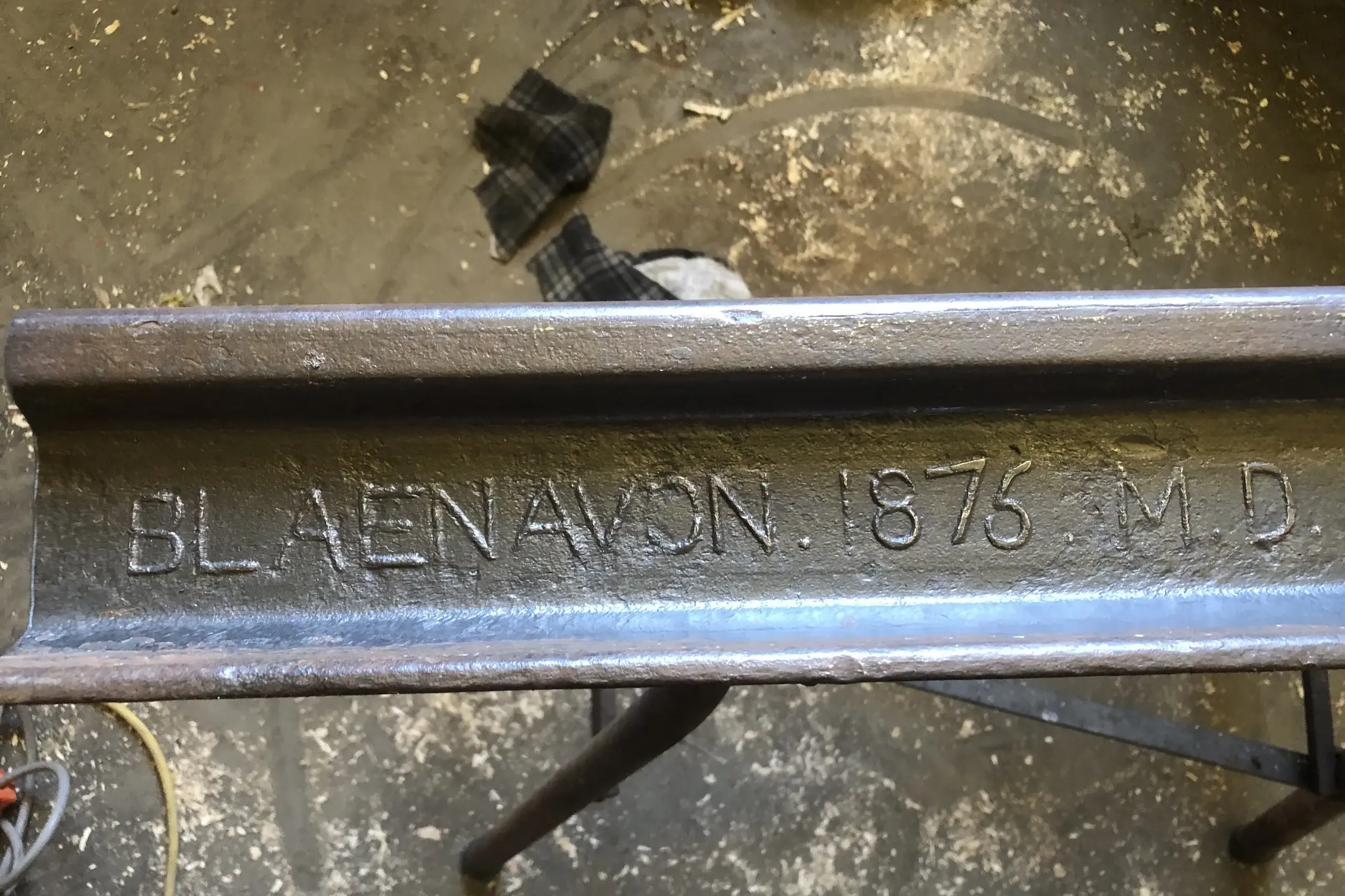
A remarkable piece of railway history has been uncovered during Inland Rail works at Euroa, sparking interest among local heritage enthusiasts. Retired engineer and Euroa resident Tim Miller stumbled upon the find while visiting the railway station with his young grandchildren to watch the demolition of the Anderson Street bridge. Near the old station building, Mr Miller noticed a distinct insignia on a piece of old rail protruding from the ground and serving as a bollard to keep cars off the platform. “I could see an insignia on the rail and thought it looked significant,” Mr Miller said. “On closer inspection I could see the date 1875.” Determined to preserve the artifact, Mr Miller approached Inland Rail construction partner John Holland and requested to have the piece extracted and delivered to him for preservation. After trimming the corroded section and cleaning off 150 years of rust, grime, and numerous layers of paint Mr Miller confirmed the inscription: ‘Blaenavon 1875 MD’. Further research revealed the rail originated from Blaenavon, a village in Wales renowned for its ironworks during the 19th century. “It’s incredible to think this piece was made 150 years ago in Wales and ended up here in Euroa,” Mr Miller said. The railway was opened to Euroa in 1872 with the whole Melbourne to Wodonga line opening in 1873. Mr Miller said the historic piece of rail was lighter than rail used on the mainline at the time and believes it was likely used on a siding or in the goods shed. The antique rail is also wrought iron instead of the universally used steel rail of the twentieth century and later. Australia imported all its early rail, locomotives, and rolling stock primarily from the UK in the 1800s, but by the late 1800s local manufacturing of locomotives and carriages had begun. However, rail was not rolled in Australia until 1911. Mr Miller delivered the restored rail to the Euroa Historical Society on Monday 1 December, where the rather unique artefact will be displayed alongside its fascinating story. Adding a personal twist, Mr Miller’s great-great-grandfather Henry Miller served as Victoria’s Commissioner of Railways and Roads from 1866. “This find connects local history, global industry, and even my own family heritage,” Mr Miller said. “It’s a piece of the past that deserves to be remembered.”