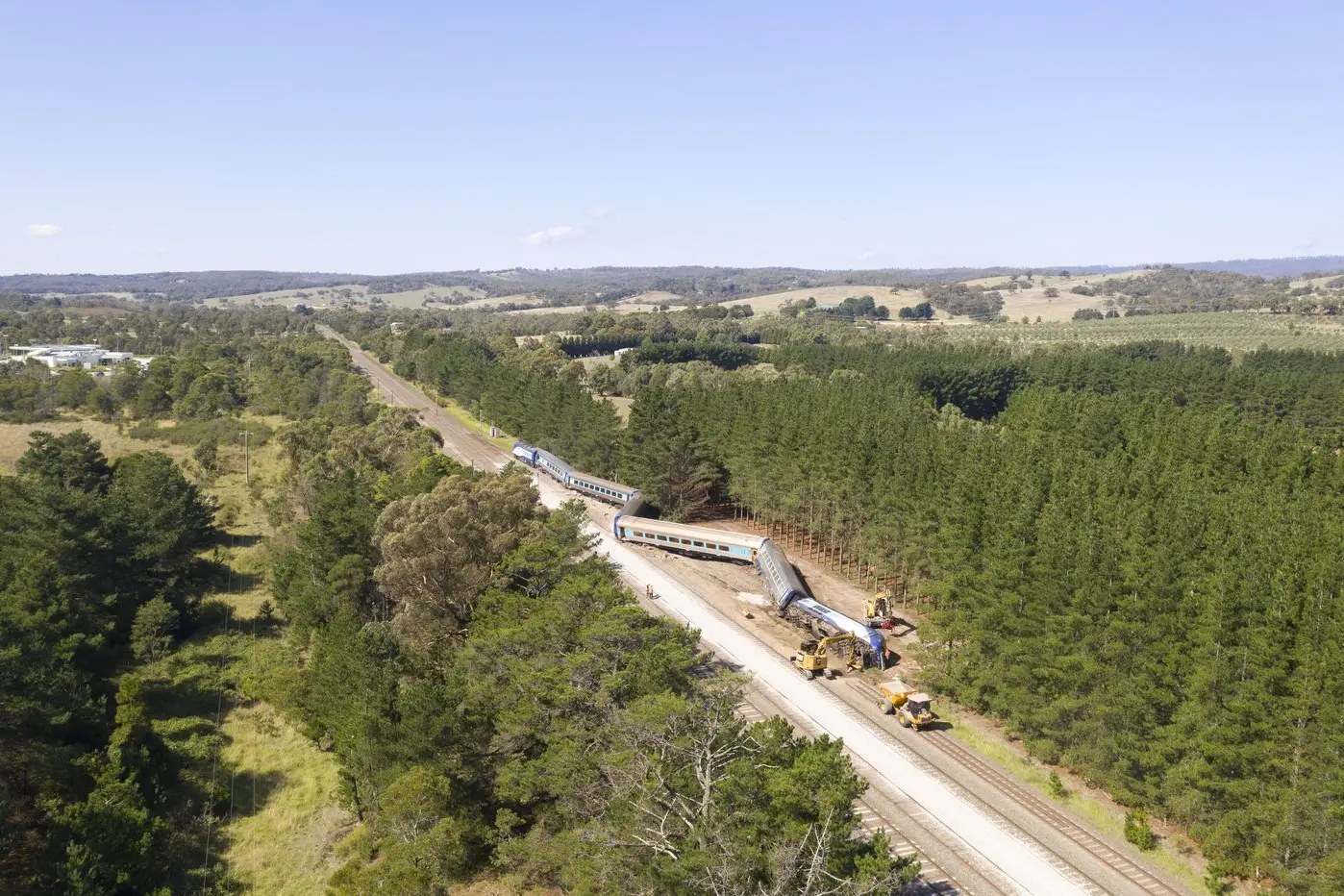
A BREAKDOWN in risk management processes contributed to the derailment of an XPT passenger train at Wallan in early 2020, after the service entered a crossing loop at more than 100kph the permitted speed.

The service, which was travelling from Sydney to Melbourne along the North East rail line on February 20, was recorded at speeds of between 114 and 127kph as it entered the loop, which carried a maximum speed of 15kph, and ultimately derailed, killing the driver and a single worker and injuring a further 66 passengers and crew.

Eight passengers were admitted to hospital with serious injuries, while 53 passengers and five service crew sustained minor injuries.

The Australian Transport Safety Bureau (ATSB) recently identified 15 safety issues which contributed to the crash, which occurred after a signalling hut was rendered inoperable following a fire earlier in the month.

The investigation found rail infrastructure manager Australian Rail Track Corporation (ARTC) had given train drivers permission to travel through a 24km section of track between Kilmore East and Donnybrook while the signalling system was out of action.

The deceased qualified worker boarded the train at Kilmore East, and provided the XPT driver with a modified train authority document which detailed the service would be routed through the Wallan Loop.

ATSB chief commissioner Angus Mitchell said the change in route had occurred on February 20 to allow contaminants to be removed from the track before testing the repaired signalling system.

“In the 12 days prior to the accident, the driver had operated the XPT service through Wallan eight times, and on all occasions the crossing loop was locked out of service, this has led us to believe they probably expected to remain on the straight track, where the speed limit was 130kph through Wallan,” he said.

“However, there was no protocol in place to confirm the driver’s understanding of the revised instruction, with no requirement for the driver to read back or confirm the instructions to the network control officer.”

The investigation also found NSW Trains did not have a functioning process for obtaining critical safety information for its Victorian operations from the ARTC web portal.

Mr Mitchell said more needed to be done to manage the risk associated with human error.

“There was an over-reliance on administrative controls and the missed opportunities to use existing and emerging technologies to manage risk associated with human error,” he said.

“To improve safety outcomes, the rail sector must move faster and together in embracing technology to improve its management of safety risks.”