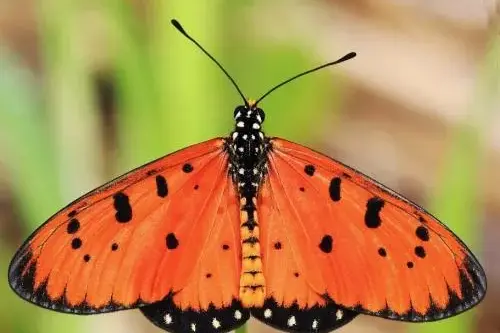
A fast-moving butterfly is helping scientists prove that Facebook and Flickr aren’t just for holiday snaps, they could be key allies in tracking invasive species and monitoring biodiversity shifts in real time. In a new study published in Conservation Biology, an international team of researchers led by Monash University School of Biological Sciences have shown that social media platforms can provide faster, broader, and often more detailed biodiversity data than traditional sources. The team, led by Dr Shawan Chowdhury, used public Facebook and Flickr posts to track the tawny coster butterfly (Acraea terpsicore) and uncovered a far more extensive and rapidly changing distribution than existing biodiversity databases revealed, including its spread into Australia. “Social media gave us faster, broader, and often more precise data than the world’s largest biodiversity repositories,” Dr Chowdhury said. “We found the tawny coster expanding into higher elevations and latitudes, including right here in Australia. This is real-time evidence of how species are moving as the planet warms, and it shows we need to get smarter and faster in how we track it.” Native to India, Bangladesh, and Sri Lanka, the tawny coster has rapidly expanded its range into other South Asian countries. Since its first Australian record near Darwin in 2012, the butterfly has spread eastward across the Top End and into Queensland, covering over 135 kilometres per year. While there has been no economic impact in Australia, and the species is not yet a declared pest, it is considered a pest species in Sri Lanka, for example. Its expansion into new ecological zones raises red flags for native ecosystems and long-term biosecurity.