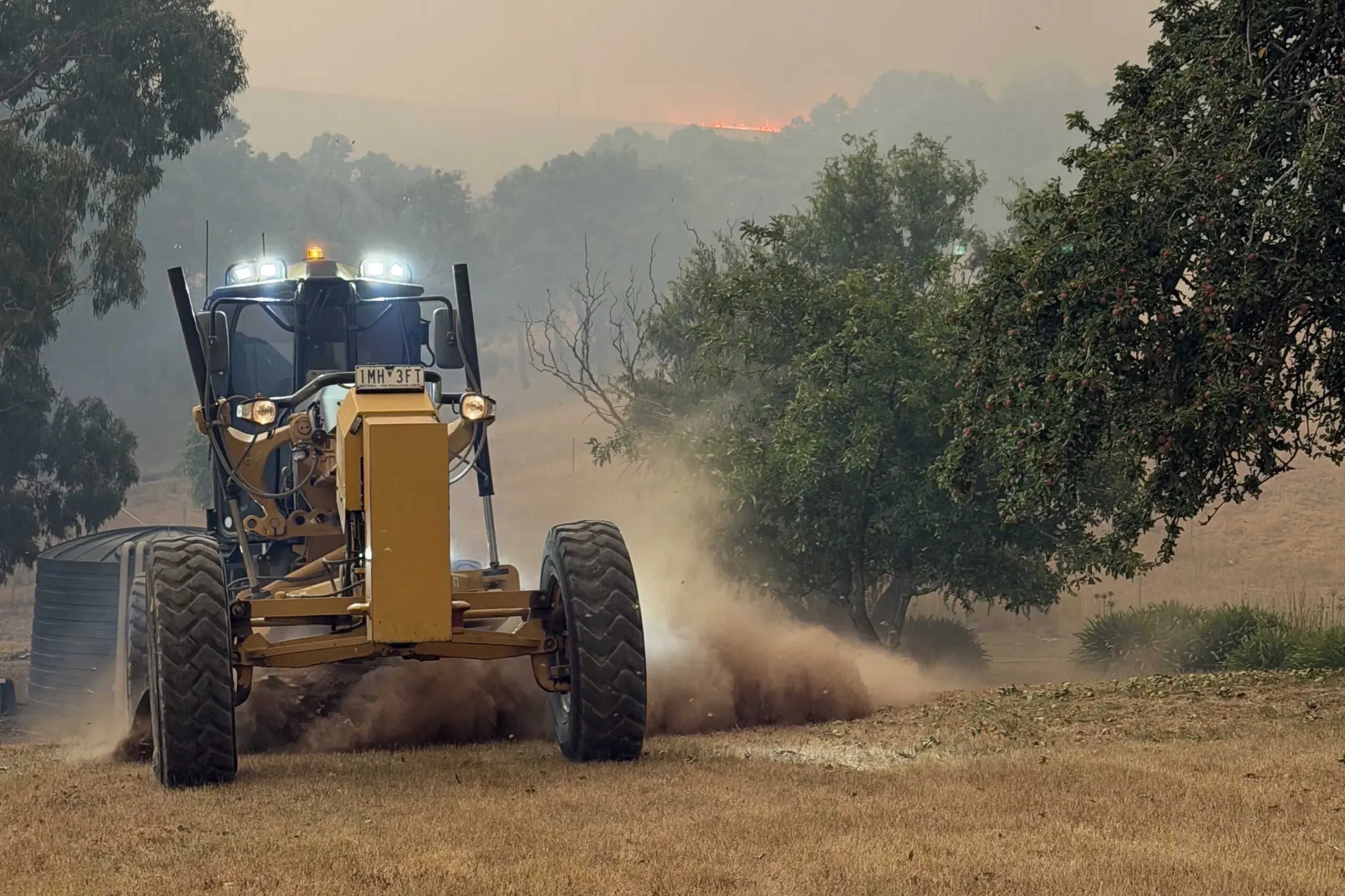
Voices are now being raised in the aftermath of the Longwood bushfire about the role of CFA command in coordinating brigade trucks and helicopters. The matter was raised during state parliament's first sitting week with Member for Northern Victoria Region Rikkie-Lee Tyrrell questioning some operational decisions by CFA command during the bushfire. In a constituency question to the Minister for Emergency Services Vicki Ward, Ms Tyrrell raised examples of CFA crews being ordered by commanding officers away from fire scenes, leaving residents to fight fires by themselves, using their own equipment. “Once again our brave CFA members came to the rescue, continuously fighting fires for days on end to save properties and lives," Ms Tyrrell said. “In the face of catastrophic bushfires, affected communities joined together to (also) help save each other’s homes and livelihoods with great courage and resilience.” Ms Tyrrell said the family of constituent Cameron Webb was battling fire on their property outside of Yarck when a CFA tanker arrived, drove into the paddock and immediately left, the crew being ordered to return to the command centre where they sat unused. Mr Webb spoke with this masthead about the lengthy battle he had with the fire alongside a friend, his sister, brother-in-law, and parents. The family was able to save their home and around 16 hectares of land surrounding it, but lost pasture, fences, a hay shed, and over 600 bales of hay and silage. "The (CFA) trucks would have been out the front of the property and so we thought that they were there for long hall and help us with asset protection," Mr Webb said. "As quick as they got there, they left." Mr Webb also stressed that he had no criticism of any CFA firefighters. "I know most of these blokes; I grew up with them. "My question is for the CFA command - how do they know what it looks like on the ground to make decisions?" Twenty-five of the family’s cows were in calf, with only a handful surviving. “It’s broken my father’s heart," Mr Webb said. As the fire approached, the farm's dam was full for stock troughs and was accessed for water by helicopters. “We had them sucking up water and we thought this was good, but when the fire came the trucks packed up. “They said they had been told to fall back to Yarck. “That was it, we were there to deal with everything on our own." He also said that earlier the CFA unit pumping water from the family's dam would not top up the 400L tank for his sister. "I find that quite frustrating," he said. "They told her 'we don't fill up for private tankers'." The day before, Mr Webb and his mate worked a grader to cut firebreaks from when the fire started until 11pm, with mixed success, as well as cutting fences. “It seemed to work, but it got frustrating; the wind would pick it up and lay the flames flat on the ground, letting them touch the other side (of the breaks) and off they went." Ms Tyrrell told parliament of other constituents having similar stories, some from Locksley residents. “I have been told stories of CFA crews being ordered from fires by commanding officers, leaving property owners to battle the fires alone with their own equipment,” Ms Tyrrell said. “No-one is questioning the commitment of CFA personnel to keep Victorian’s safe, but reports of decisions by commanding officers to stand down units on the frontline, leaving residents alone, are extremely concerning. “I have asked Minister Ward to enquire into the circumstances surrounding these decisions because my constituents affected deserve answers.” Mr Webb said his family used two utes loaded with firehoses, pumps, and water, each limited to carrying 500L to make cartage possible. “It was hand-to-hand combat, trying to cut its throat. “We were all having a bit of a go, and it slowed right down in that last fire break which gave us a 40-acre tear drop of unburnt land. “We broke its spirit. “But you don’t brag about what we achieved because a lot of others are worse off." He also said that out of the eight tankers, ‘not one’ was ordered to help an eighty-year-old neighbour whose property was in peril. "The decision making of CFA is the most frustrating stuff. "Someone in an office telling the strike teams on the ground to fall back and not let those on the ground to decide visually. “I hope something comes out of it – that something changes.” CFA Deputy Chief Officer Northwest Gavin Thompson said the mission of CFA was to protect lives and property. "That mission is underpinned by a fundamental, non‑negotiable principle: the safety of firefighters must always come first," Mr Thompson said. He said that a community meeting was held in Seymour the evening before the forecast catastrophic conditions on January 9, where it was explained that the 'highest priority' for fire crews was the protection of lives, followed by the protection of the critical infrastructure that supports community resilience post fire. "Fire is a shared responsibility and it is CFA’s advice to leave early on days of extreme and catastrophic conditions," he said. "With the dynamic nature of fire behaviour on the day, our crews' tasks were prioritised based on many factors; however, we are aware of many crews who undertook asset protection of homes, farms and other assets where it was safe to do so. He said Victoria’s emergency‑management arrangements relied on a combination of agency response, timely warnings, and community preparedness. "These principles remain essential to keeping people safe during fast‑moving fires. "CFA volunteers have responded under extremely challenging conditions, and we are proud that they have all been able to go home to their families and our thoughts are with those volunteers and community members who have lost their own homes, properties, and businesses."