
PHOTO
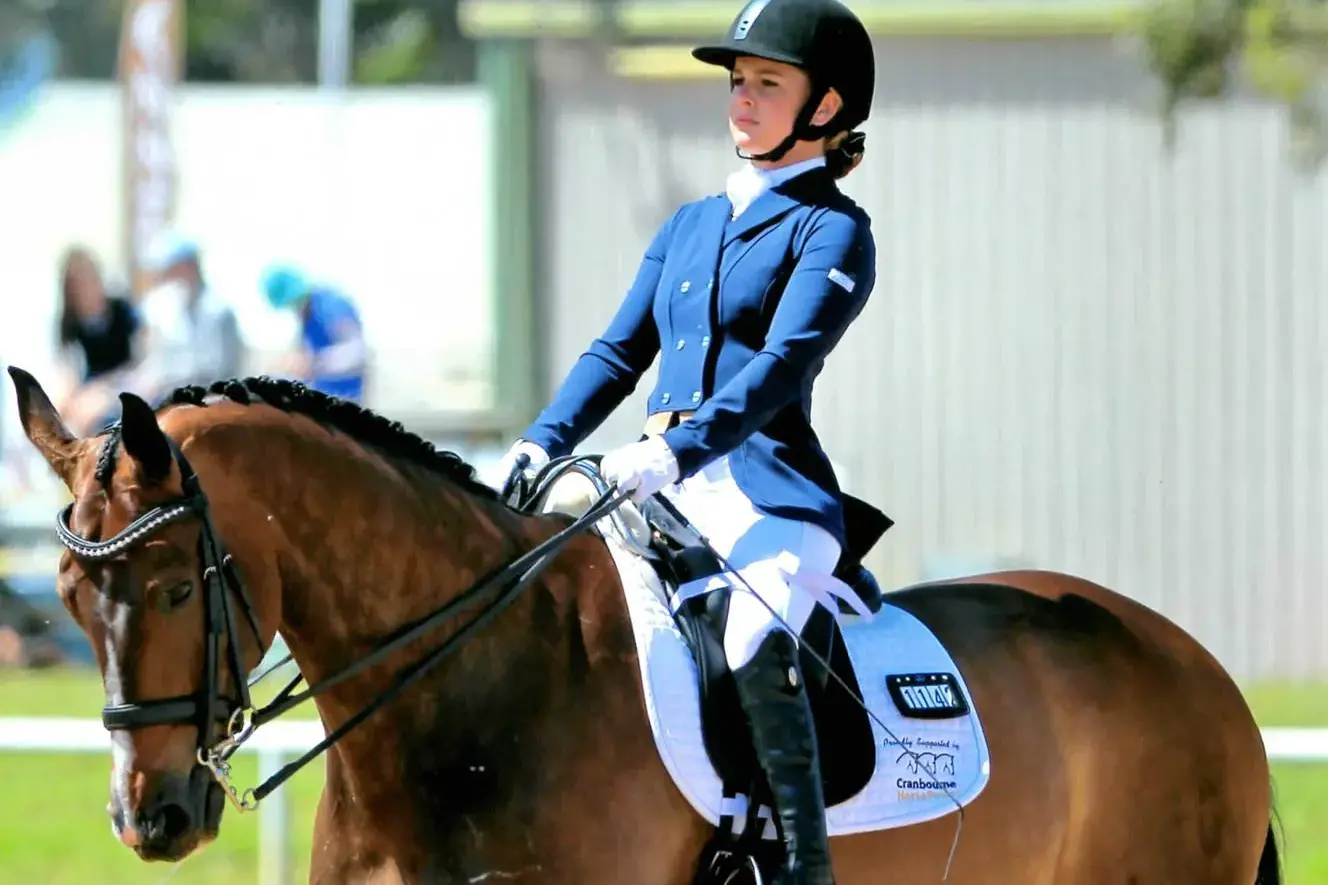
Australian Paralympic equestrian Emma Booth has recently embarked on a new chapter in her life, trading the fast pace of city living for the serenity of the Strathbogie region.
Booth, a two-time Paralympian who represented Australia at the 2016 Rio and 2020 Tokyo Paralympics, has had a journey defined by her intense passion for horses.
Growing up in southeast Melbourne, Booth’s love for horses emerged early.
“I started riding in 2002 when I was 11 years old," she recalls.
"I have always had a love for animals, and particularly horses.
"My parents weren’t horsey, so when I was growing up they kept putting off getting me horse riding lessons, thinking I was just going through a phase."
Her introduction to competitive riding came in a remarkable way.
At age 11, Booth entered a nationwide competition run by the popular television show The Saddle Club.
Out of more than 40,000 entrants, she won a pony for a year, with all associated expenses, including lessons, all covered.
“I took to riding like a duck to water.
"I started competing in open classes after only three months and absolutely fell in love with the sport.
"I think this was when my parents realised it wasn’t just a phase.”
She named her pony Zidane and began a journey into competitive equestrian sports that would eventually take her around the world.
Despite financial limitations in her early years, Booth’s parents quickly became her biggest supporters.
“When I got my first pony in 2002, and my parents saw how driven, passionate, and naturally talented I was, they have been nothing but my biggest supporters every day since.
"They gave up so much to support my early riding career, and I am forever grateful to them for allowing me to pursue my passion.”
Emma also drew inspiration from Australian Olympian Andrew Hoy, whose poster adorned her bedroom wall long before she began competing at an elite level.
Booth’s trajectory shifted dramatically on 7 April 2013.
Returning to Melbourne from the Albury Horse Trials, the car she was travelling in collided with a jack-knifed truck.
Leaving Emma with severe injuries.
Remarkably, Booth returned to riding just seven months later, driven by an unwavering determination to compete at the Paralympic level.
Her international debut as a para-equestrian came in 2014 at Hartpury, England, where she finished consistently in the top six.
At the 2016 Rio Paralympics, she rode her Danish-bred horse Zidane to a fifth-place finish in the Individual Championship Test Grade II and contributed to Australia’s ninth-place team finish.
Four years later in Tokyo, Booth and Mogelvangs Zidane placed eighth individually and fifth in the team event.
High-performance para-equestrian training demands flexibility and resilience.
“I’m an L2 paraplegic, and my health can change daily - some days I have excruciating nerve pain and need to rest, other days I’m fighting fit,” Booth explains.
She balances her own fitness with her horses’ needs, riding roughly four days a week and supplementing her training with physiotherapy and Pilates.
Booth credits her experiences on the Paralympic stage with profound personal growth.
“My first test in Rio was a disaster, but I had one day to refocus, make adjustments, and place in the top five.
"It taught me to never expect things to go perfectly and to plan for the best but prepare for the worst.”
She emphasises the importance of teamwork and the personal insights gained from competing alongside fellow athletes and attributes much of her success to her support network.
“I wouldn’t have achieved any of this without my amazing team.
"My groom Paige Drake has worked with me for over seven years.
"My partner Peter is my rock, always cheering me on and supporting me through the highs and lows.”
Since moving to Strathbogie, Booth and Peter have embraced their new surroundings.
“The community is so lovely," she said.
"We’ve met neighbours, been invited to functions, and feel incredibly welcomed.
"You couldn’t pay us enough to relocate again.”
Despite the challenges she has faced, Booth remains optimistic.
“Each time we get knocked down, it’s the love of the horse and my passion for competing that gets me back up.”
She hopes to continue competing internationally, potentially at the World Championships in Germany or the 2028 Paralympics in Los Angeles, and dreams of competing on home soil at Brisbane 2032.
Beyond competition, she aims to coach, and she mentor riders in her region, sharing her passion and experience with the next generation.