
PHOTO
Questions have been raised by one of Victoria’s oversight bodies tasked with holding government to account, about how effectively it can support communities recovering from disasters like January’s Longwood bushfire.
Victorian Ombudsman Marlo Baragwanath has claimed that her office is significantly constrained to help fire-affected locals by the way it is funded.
Ms Baragwanath, who lives locally and was personally impacted by recent bushfires, said the structure of funding for her office creates what she described as a ‘clear and ongoing’ conflict of interest.
“We report to Parliament, but we’re funded by the government of the day in circumstances where we oversight it,” she said.
“It is a complete conflict of interest that the government gets to set our budget.”
The comments follow her visit to Euroa, where she met with residents still navigating the long and often complex process of bushfire recovery, including rebuilding, dealing with agencies, and accessing services.
While her office plays a key role in resolving complaints about government agencies and identifying where systems are failing, Ms Baragwanath said limited funding significantly restricted how proactive her office can be — particularly in disaster-affected communities.
“I just don’t have the resources to do it,” she said.
That limitation, she said, means her office is largely reliant on complaints coming through formal channels rather than being able to actively engage with communities early in recovery, when many issues first emerge.
“I would love to take that kind of approach when there’s a particular incident or issue that we know is going to be problematic… I’m not funded to do it,” she said.
The concern is not isolated to her office, with the Ombudsman joining Victoria’s other key integrity agencies — the Independent Broad-based Anti-Corruption Commission (IBAC) and the Auditor-General’s Office — in calling for urgent reforms to how oversight bodies are funded.
In a joint paper, the agencies warned that the current system lacked transparency and limited their independence, noting that budgets are determined by the same government they are responsible for scrutinising, without full parliamentary oversight or clear explanation of funding decisions.
The agencies have recommended a range of practical changes, including clearer disclosure of funding decisions, stronger involvement from parliamentary oversight committees, and safeguards to ensure funding processes are transparent and independent.
Ms Baragwanath said calls for reform were not new, pointing to repeated recommendations — including from parliamentary committees — for the introduction of a more independent funding model.
“We’ve been pushing for an independent funding process for years, but there’s been no movement,” she said.
For regional communities still recovering from natural disasters, the issue is not just abstract.
Ms Baragwanath said a more resourced and independent Ombudsman’s office would be better placed to identify emerging problems early, before they escalate into larger systemic issues affecting multiple people.
Under the current model, however, that work is constrained.
“We’re running on the smell of an oily rag,” she said.
Despite that, the Ombudsman said her office continues to prioritise resolving individual complaints quickly and will intervene directly where delays or administrative failures are unreasonable.
But she acknowledged that without additional funding and structural reform, there are limits to how far that work can go in terms of staffing.
The situation also highlights a broader challenge facing the integrity system: balancing independence, accountability, and funding in a way that maintains public trust.
Ms Baragwanath said the ability of oversight bodies to operate without perceived or actual influence from the government they monitor is critical.
While the joint paper outlines a pathway forward, including models already adopted in other states to improve transparency and independence, no changes have yet been implemented in Victoria.
For communities like those in the Strathbogie region, still working through the long tail of bushfire recovery, the issue is a practical one.
As residents continue to navigate delays, administrative processes, and interactions with multiple agencies, the capacity of oversight bodies to respond effectively — and independently — remains an important part of that recovery.
Ms Baragwanath said her office would continue to monitor emerging complaints from fire-affected areas and step in where possible.
But without changes to funding and structure, she said, there were limits to what can be achieved.
‘It was coming at me from all sides’
As the Longwood fire tore through Creightons Creek, CFA volunteer Michael Doyle found himself defending his own property as the blaze closed in.
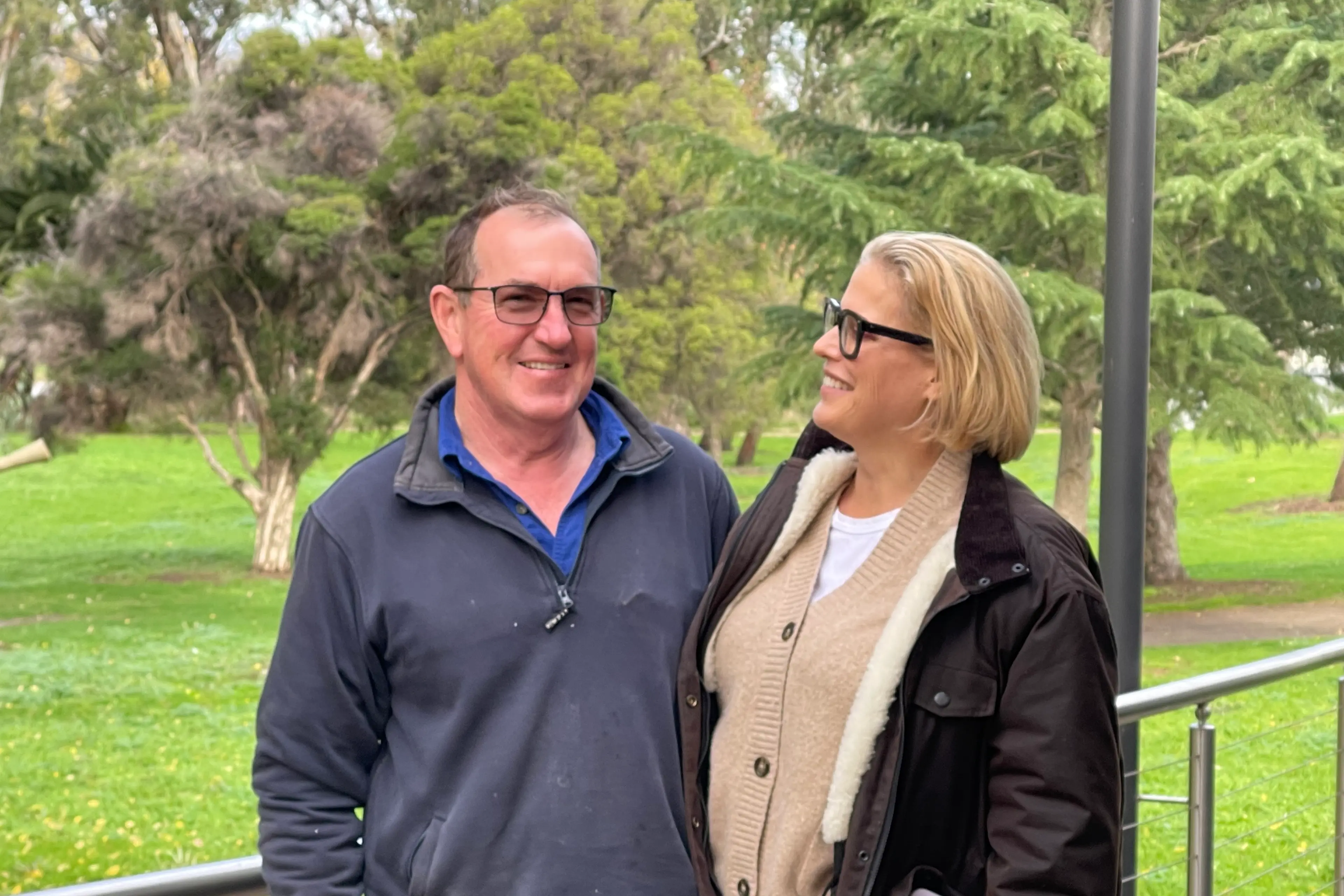
At the same time, his wife, Victorian Ombudsman Marlo Baragwanath, was in Melbourne, unable to return and unsure if he was safe.
“That was the most traumatic thing for me – not knowing whether Michael was alive,” Ms Baragwanath said.
For Mr Doyle, the situation escalated rapidly on the fire’s third day, Friday 9 January, when shifting winds pushed the fire directly toward their property.
“It was coming down the creek and back over the hill behind my place so it was attacking me on all three sides,” he said.
Having already decided to stay and protect his land and home rather than remain on fire trucks, he was soon working to hold multiple fronts.
He attempted to stop the fire crossing into his paddocks at the front of the property, with only limited assistance before it pushed through further along the road.
At the same time, a second front was building behind him.
“I thought, well now I’m in real trouble,” he said.
As the fire reached his land, he began opening gates to move between paddocks as he tried to slow its spread.
He described the effort as relentless, with flames repeatedly flaring up as quickly as they were knocked down.
“It was a bit of a hiding to none,” he said.
At one point, a helicopter operator broke from assigned duties to assist, dropping water along the fire line after spotting Mr Doyle working alone.
On the ground, help came in bursts, including a local crew returning the favour after being assisted the previous day.
Even so, much of the effort fell back to Mr Doyle as he worked to contain the fire around his home.
In the end, he estimates about 85 per cent of the 120-hectare property was burnt, including pasture and fencing.
Buildings and livestock were saved.
He said preparation and access to water were critical.
“If I hadn’t had a generator, I would have been totally cooked,” he said.
The experience, he said, is likely to influence how rural communities respond in future fires, with more people expected to stay and defend their own properties rather than leave to assist elsewhere.