
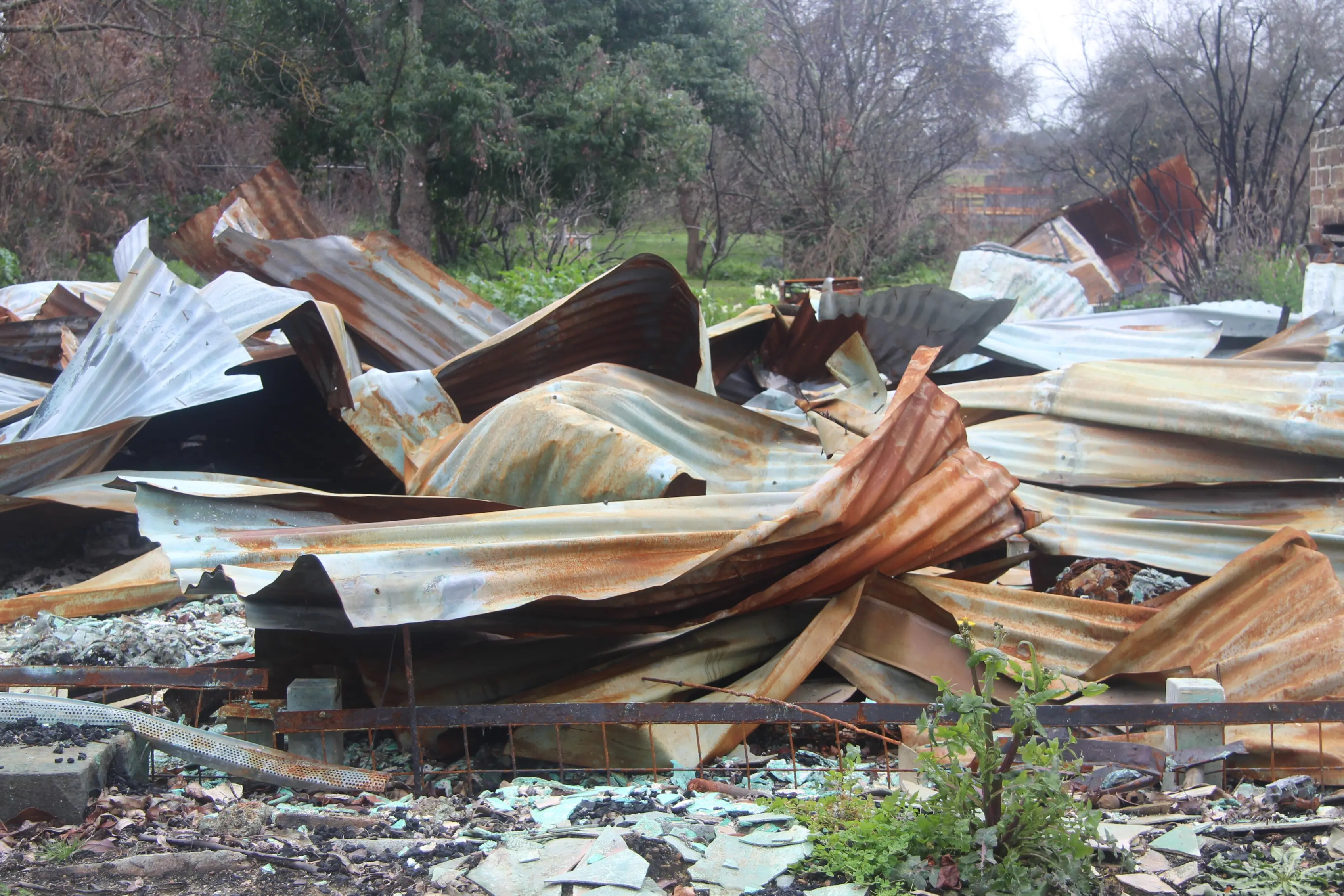
PHOTO
A parliamentary research report examining Victoria's bushfire recovery response has highlighted concerns ranging from communication failures and delayed assistance to under-resourced councils and a lack of support for community-led recovery.
The report, Enabling Community-Led Bushfire Recovery, was researched by University of Melbourne student Saskia Heng through the Victorian Parliamentary Internship Program under the supervision of Euroa MP Annabelle Cleeland.
Ms Cleeland said the findings reflected concerns repeatedly raised by communities affected by the January bushfires.
"This shouldn't just be uncomfortable reading for the Allan Labor Government," she said.
"It should be a wake-up call."
Ms Cleeland said she intended to raise the findings through Parliament and the inquiry into the January bushfires.
The Heng report was based on in-depth interviews with 13 community recovery leaders, government officials and disaster recovery researchers.
While the report recognised the need for government to ultimately lead recovery after a bushfire, it said the reality of community-led recovery often operated through a centralised, government-driven model, with communities repeatedly reporting they lacked the information, authority and resources needed.
The report found communities were often able to mobilise and recover more quickly than governments could respond, but that existing systems were not always able to support those efforts.
The report focused on three key areas:
• Insufficient communication left residents unsure who was responsible for services and support, relying instead on public announcements rather than direct engagement.
• Despite communities mobilising quickly after disasters, decision-making power and funding remained concentrated within government structures.
• Investment in social networks, local leadership and community organisations should occur before disasters strike rather than after them.
One of the strongest personal accounts came from a community recovery leader who said they received no response after repeated attempts to contact the Incident Control Centre and Emergency Recovery Victoria.
"I got nobody ringing me back," they said.
"It was just absolutely appalling."
Another recovery leader said they had relied on AI and Google to develop a one-month recovery plan because no department could supply one.
Some grassroots recovery efforts also included the creation of QR-code inventory systems to manage donations and supplies at community recovery hubs.
Delayed clean-up after the bushfires was highlighted by a resident whose block had not been cleared after 15 weeks.
While one government participant acknowledged in the report that a six-to-eight-week timeline was broadly consistent with previous clean-up programs, poor communication created the perception among some residents that little or no progress was being made.
The report also repeatedly described local government as a critical link between communities and the state, but said councils were often poorly resourced to fulfil that role.
One participant, identified as Participant 2, said local government had been 'hamstrung' and that additional resources would have improved coordination with grassroots recovery efforts.
"They are extremely under-resourced, both financially and personnel-wise," they said.
"They kept telling us, 'We haven't received any funding yet, so we can't even employ one full-time and one part-time worker to assist with the recovery'.
"They did get a recovery manager, and she's been brilliant, but she's also hamstrung financially.
"So, it's kind of a lame duck local government."
The report also included interviews with government recovery officials identified as Participants 4, 8 and 10, who offered candid assessments of the recovery system.
Participant 4 said the state's approach was often to activate after disaster rather than building recovery capacity beforehand.
"I think it means that you're reactive, right?" they said.
"So, you're not investing in what good recovery could look like and how to support and how to build capacity for recovery."
The participant also suggested political pressures could hinder community-led recovery efforts.
"There is a political imperative sometimes that gets in the way of people taking the time to work out the best approach," they said.
"It's like, 'But it needs to be delivered tomorrow, it needs to be set up tomorrow, and it needs to be set up in these five communities, and it needs to look the same'."
Participant 8 said some recovery programs were operating within expected timeframes but what was happening behind the scenes was not always visible to affected communities.
The participant said communication failures could be as damaging as delays themselves, with residents left without explanations or updates and assuming no progress was being made.
"State government needs to be better about explaining what it will do, and then just doing that," they said.
The report found such communication vacuums were often filled by the 'loudest, most frustrated voices'.
Participant 10 said government agencies were identifying needs within communities and filling gaps where they could through a 'safety net' response.
The participant also highlighted the complexity of funding and policy arrangements that must be navigated when distributing assistance after disasters while maintaining accountability for public funds.
GOVERNMENT POINTS TO INVESTMENT
In response to the Heng report, the Victorian Government said it had invested more than $420 million in bushfire recovery support and continued to work closely with affected communities and councils.
A government spokesperson said recovery was most effective when it reflected local needs and priorities.
"Recovery works best when it's shaped by locals – that's why we have backed councils with the people, places, and resources they need to support their communities through the long road ahead," the spokesperson said.
They also said the government had backed councils with additional recovery staff and local support hubs.
"We funded 27 community recovery officers and invested in local Recovery Hubs across 15 councils, ensuring bushfire-impacted Victorians could access support and information close to home."
The government said Recovery Hubs provided central locations where affected residents could access services and information, while the recovery officers worked with councils to identify local needs, coordinate initiatives, and provide support on the ground.
Dedicated Emergency Management Victoria personnel had also been deployed alongside impacted councils to help identify recovery priorities and inform ongoing support programs.
Other supports included financial assistance, clean-up programs, accommodation, legal assistance, case management, and mental health services.
"We continue to work closely with councils and communities to make sure recovery support is tailored to local needs."
FUNDING GAP REMAINS: MAYOR
Strathbogie Shire Mayor Scott Jeffery said a significant funding gap remained in the Longwood Berrys Lane bushfire recovery despite support already committed by the Victorian Government.
While welcoming recovery funding announced to date, Cr Jeffery said more support would be needed as communities recovered from one of the region's most destructive bushfires in recent memory.
"There is a significant gap between what has been funded and what communities will actually need over the coming years," he said.
Cr Jeffery said 115 homes, 243 sheds and outbuildings, 30,000 head of livestock, and 33,534 hectares of farming land were affected by the bushfire, alongside community assets, community infrastructure, and local businesses.
He said councils played a critical role in supporting communities through the recovery process but required adequate resources to do so effectively.
"Councils are the lead agency for disaster recovery and play a vital role in supporting those impacted, but they must be funded adequately to provide this essential support," he said.
Of the $15 million announced to establish community recovery officers and Recovery Hubs across bushfire-impacted areas, Strathbogie Shire received $1.3 million.
"Bushfire-impacted councils will also receive $750,000 each but, with recovery expected to take up to three years, we anticipate there will be a $2.8 million funding shortfall."
Cr Jeffery said council was seeking additional support from the Victorian Government, including rate relief, resilience-building initiatives, and critical infrastructure improvements.
He said council had also requested up to three years of rates relief for residents affected by the bushfire, along with a waiver of the Emergency Services Volunteer Fund levy.
Infrastructure repairs, upgrades, and resilience projects were expected to cost about $12.9 million.
"Current disaster funding settings aren't keeping pace with the increasing frequency and severity of climate-driven events," Cr Jeffery said.
"The 2022 floods left council out-of-pocket by more than $3 million, and we need to ensure bushfire funding is sufficient to meet community needs from this latest disaster."
Cr Jeffery said Strathbogie had joined with Murrindindi, Mansfield, and Mitchell councils in advocating for additional assistance from state and federal governments.
"Council has signed a memorandum of understanding with those councils, and we are working together to advocate to state and federal governments to ensure our impacted communities are receiving the funding they need."
CLEELAND: FINDINGS SHOULD SHAPE INQUIRY
Member for Euroa Annabelle Cleeland said the Heng report exposed significant shortcomings in Victoria's bushfire recovery framework and should help inform the upcoming bushfire inquiry.
"This isn't just frustrated residents saying recovery was botched," Ms Cleeland said.
"It's the government's own officials, on the record, admitting they are reactive rather than prepared, and that political pressure gets in the way of doing this properly."
Ms Cleeland drew particular attention to comments from Participant 4, who described the state's approach as a "safety net" model that largely activated after disasters occurred.
"That is Labor, in its own words, confirming this is about the bare minimum, not genuine investment," she said.
Ms Cleeland also pointed to findings that councils and community organisations often lacked the resources required to lead recovery efforts effectively.
"You cannot call something community-led when you starve the very organisations meant to deliver it," she said.
"Every fire teaches us something.
"What communities need is a government that communicates honestly, backs local leadership and provides the resources needed to recover properly."