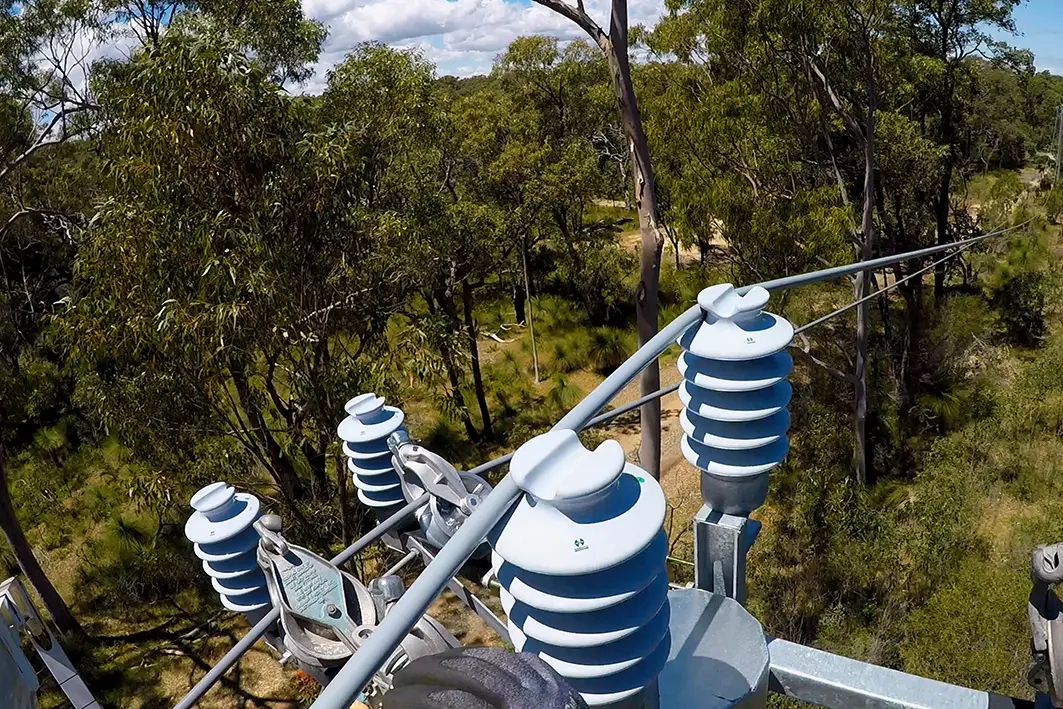
Strathbogie Shire Council has joined key stakeholders in slamming a decision by the Australian Energy Regulator (AER) to reject a major power upgrade for the region, saying it leaves communities facing ongoing blackouts, delaying any chance of a long-term fix for at least five years. The regulator this week knocked back AusNet’s proposal to install a $38 million express feeder to improve reliability on the Benalla–Euroa BN11 powerline, instead approving just $5.7 million for covered conductors as part of its final revenue determinations for the 2026–31 period. The BN11 line supplies more than 5000 customers across Euroa, Violet Town, and surrounding communities and is the longest single-line feeder in AusNet’s Victorian network, running through bushfire-prone terrain with no redundancy or alternative supply path. Council said the decision ignored the lived experience of residents and businesses who endure frequent outages, often lasting hours or days, particularly during summer heat and storms. Electricity was lost for days during January’s Longwood–Berrys Lane bushfire, when access to power was crucial for firefighting and communications. More than 1400 residents signed a petition earlier this year calling on the AER to approve AusNet’s submission. Strathbogie Shire Mayor Scott Jeffery took aim at the AER’s reliance on covered conductors and said the regulator had missed the opportunity to take positive action to ensure access to the energy needed for the region to thrive and grow. “Covered conductors won’t save the Strathbogie Shire businesses that are struggling to survive with fridges of spoilt food, power-dependent customers, or our farmers who need electricity to water their stock,” Cr Jeffery said. “Every power outage has a significant impact on households, business, and industry and poses an unacceptable risk to the community.” The AER said its decision was based on a cost-benefit assessment aimed at ensuring consumers paid no more than necessary for electricity services. AER board member Lynne Gallagher said the regulator had considered all submissions and feedback from stakeholders and assessed proposed spending to ensure it was clearly justified, timely, and efficient. “Our decision ensures that consumers are only asked to pay for AusNet’s forecast programs where they are demonstrably in the long-term interests of consumers,” Ms Gallagher said. In its decision, the AER said AusNet’s express feeder proposal would not address the root causes of outages on the BN11 line, arguing it would primarily provide backup supply during faults rather than reduce the number of outages while it remained exposed to similar risks as the existing line. The regulator also said the approved funding for a more extensive rollout of covered conductors would directly address the causes of poor reliability at a lower cost. A spokesperson for energy provider AusNet said the reduced spending fell short of what was needed to meet escalating network needs. “The AER’s decision was an improvement on their draft determination last year,” the spokesperson said. “But it is still $800 million less than the investment AusNet proposed.” The spokesperson also said customer electricity demand would ‘accelerate’ due to electrification and population growth and that the limited spending would bring other challenges. “This reduction will also make it more challenging for us to equip the network to withstand more frequent and severe weather events,” they said. AusNet is currently reviewing the decision in detail to consider its implications for the Euroa region. “While we are disappointed by the result, we will continue advocating for mechanisms to further address reliability uplifts in regions such as Euroa.” Council said it was the second time the AER had rejected AusNet’s plans on cost-benefit grounds and reiterated calls for the regulator to adopt a broader framework that considered emergency management, regional equity, and social resilience. Cr Jeffery said reliable power should not be a luxury. “This was the opportunity for the AER to acknowledge the importance of power reliability for our rural communities who have suffered for too long and to take positive action to ensure we get access to the power we need to thrive and grow,” he said. “Our shire needs to attract business, industry, and residents, but we can’t do that if our towns are constantly in the dark.” “This decision is nothing more than a band-aid on what is a festering sore for our communities,” Cr Jeffery said. “They deserve so much more.” It will be five years before AusNet can apply again for the express feeder project.