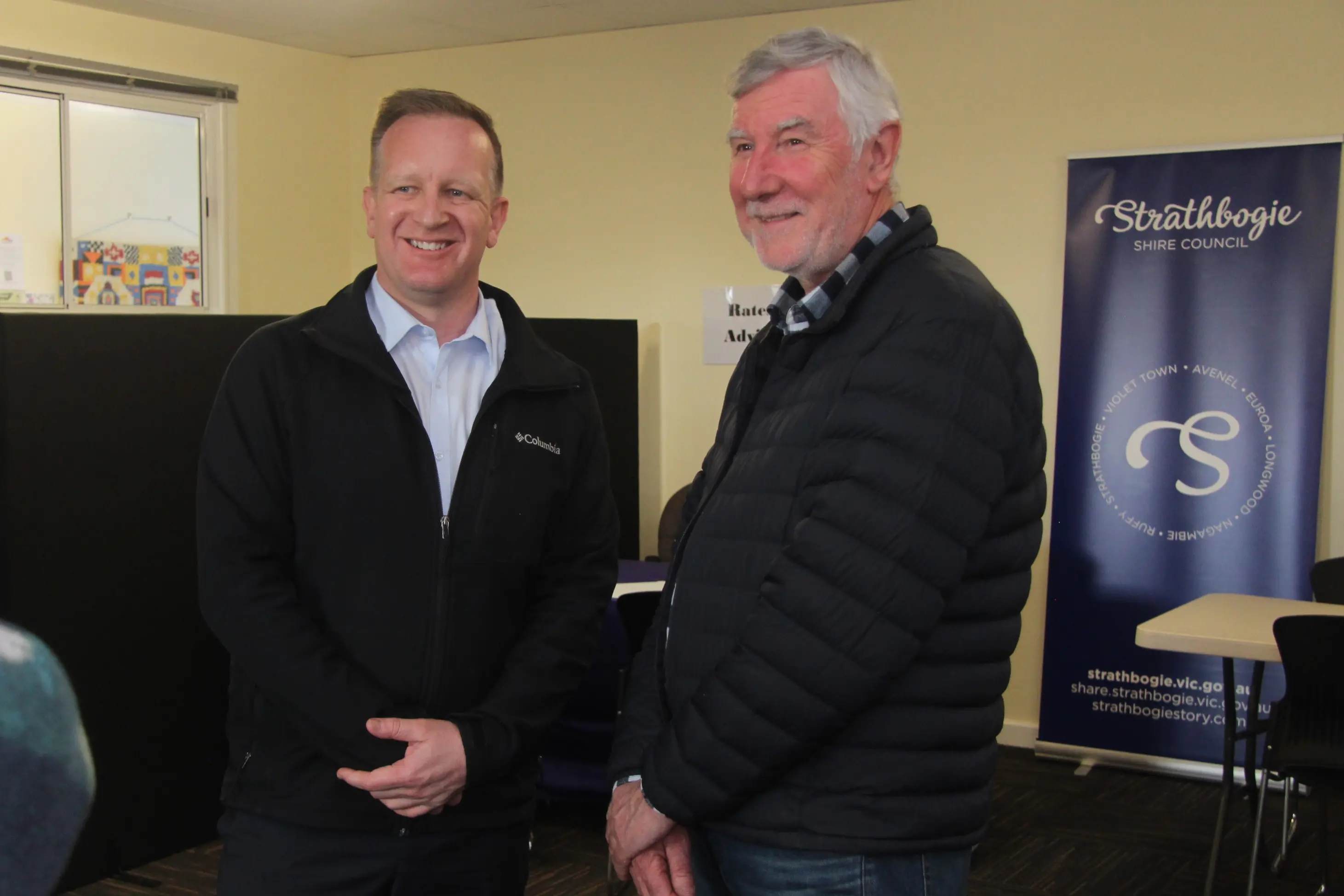
Seven months after the January bushfires, Minister for Emergency Services Paul Edbrooke has acknowledged that rebuilding lives and communities may prove more difficult than surviving the emergency itself. Speaking to The Euroa Gazette during a visit to the Euroa Recovery Hub on Wednesday 16 August, Mr Edbrooke said governments had become better at responding to disasters but still faced challenges supporting communities through the long and often complicated recovery process. "The one that I think you're hitting on is funding," he said. "Through federal funding and state funding, I think we have to have a look at what needs actioning. "Certainly we're not saying that the tap's turned off. "We understand that recovery does take a long time and often it's more stressful than the actual emergency." The comments come amid growing concern in the community about ongoing recovery support, funding shortfalls and whether enough assistance is reaching people still grappling with the aftermath of the fires. Strathbogie Shire recently sought almost $2.8 million in recovery funding but received an initial allocation of about $230,000, a figure that has drawn criticism from some residents and prompted questions about the levels of support and understanding from the government. Mr Edbrooke did not comment directly on future funding allocations but said he would discuss the matter with council representatives during his visit and relay concerns back to government. "Certainly if there are things, messages they've got for the Treasurer or local government, I'm more than happy to take that back," he said. When asked whether government truly understood the impact of long-term trauma, Mr Edbrooke agreed more work remained to be done. "I absolutely agree," he said. "I think there's plenty of research on how trauma affects communities as well as individuals. "It's a very imperfect place to operate." Drawing on his own experience of visiting Black Saturday-affected communities in the years after the 2009 disaster, Mr Edbrooke said recovery was rarely straightforward. "There are many things that all levels of government can do for communities," he said. "But it's times like these where there are a bunch of warnings that we need to take on board." The minister acknowledged that one of the biggest challenges was simply connecting people with the services already available. The Euroa Recovery Hub, which continues to operate on Railway Street, offers access to case workers and support organisations, but Mr Edbrooke agreed that convincing some people to seek assistance could be difficult. "I know growing up in the country there's a lot of pride," he said. "I hear people say, 'Help them first, they need help, I don't need it'. "The hub is where they should be referred to. "This is the place to come. "It's getting people there, though, that I think is the most difficult step." His comments echoed concerns raised by recovery workers and residents who say many fire-affected people remain reluctant to seek help despite continuing challenges. Mr Edbrooke also acknowledged the pressure being carried by local leaders, many of whom have been helping others while dealing with their own losses. "Even the community leaders we're talking about, like the mayor, his family was horribly impacted by the fire, and yet he's got to step up and provide help for other people," he said. Questions also remain over longer-term recovery measures including rate relief and modular housing. Asked whether further rate-relief support would be provided, Mr Edbrooke said he could not comment. "I don't know," he said. Likewise, while indicating modular housing had played an important role in the recovery effort, he was unable to provide updated figures on how many homes had been installed. "I want to see what's actually happening on the ground," he said. "I know Emergency Management Victoria, through their response, have done a good job. "But certainly there are individual cases where I think there could be improvement." As the community looks towards another fire season, Mr Edbrooke said governments could not afford to assume current systems were sufficient. "The way we respond to emergencies is always evolving," he said. "The way we respond to recovery and resilience often needs to evolve as well." While acknowledging recent winter rainfall had brought some relief, he warned it had also created significant fuel growth across parts of Victoria. "I think as long as we're not sitting on our laurels, thinking the world doesn't change around us, and as long as we're not thinking we can't improve on the systems we've got, we'll find ourselves in a good place."