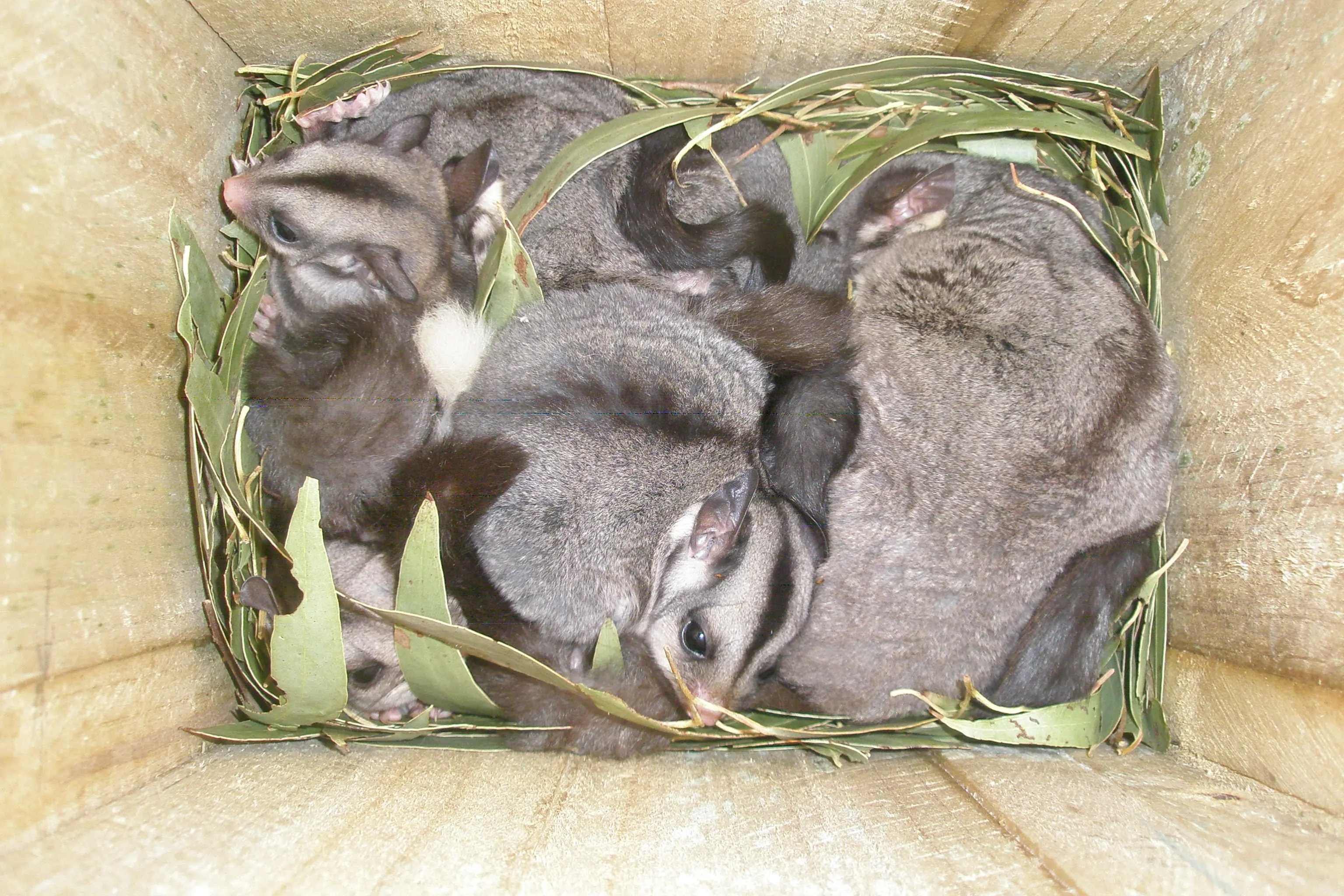
Artificial homes installed for native wildlife are proving a hit with residents, according to local conservationist Ray Thomas. Mr Thomas recently inspected a series of nest boxes out toward Creightons Creek and found every box checked had been occupied, with signs of multiple species moving in - some in succession at the one residence - and making themselves at home. "This year's monitoring has just begun, and all the boxes I checked on the first day had nesting material inside," he said. "There will be many more interesting discoveries in the next couple of weeks, I'm sure." One box showed extensive chewing around the entrance hole, a telltale sign that vulnerable squirrel gliders had likely been in residence. Mr Thomas said the species was known to enlarge the entrance holes slightly, to gain easier access to the nest boxes. "It's a sure sign of occupation by the rarer squirrel gliders," he said. "They are larger than sugar gliders, so they enlarge the hole a bit to squeeze in more easily. "It's best to keep the hole as small as possible so the animals are safer from predators." Mr Thomas was also fortunate enough to find a family of at least four sugar gliders curled up inside another nest box during a daytime inspection. Elsewhere, evidence of changing tenants was discovered. One nest contained a mixture of bird feathers, shredded stringybark, and fresh eucalyptus leaves, suggesting sugar gliders had previously occupied the box before brush-tailed phascogales moved in and refurbished the accommodation to suit their own needs. The results highlight the value of nest boxes in areas where natural tree hollows can take decades to form. Mr Thomas said the discovery of multiple species using the boxes was encouraging and demonstrated that providing suitable habitat could make a real difference for native wildlife. For local environmental groups, it was further evidence that when homes are built, residents quickly move in.