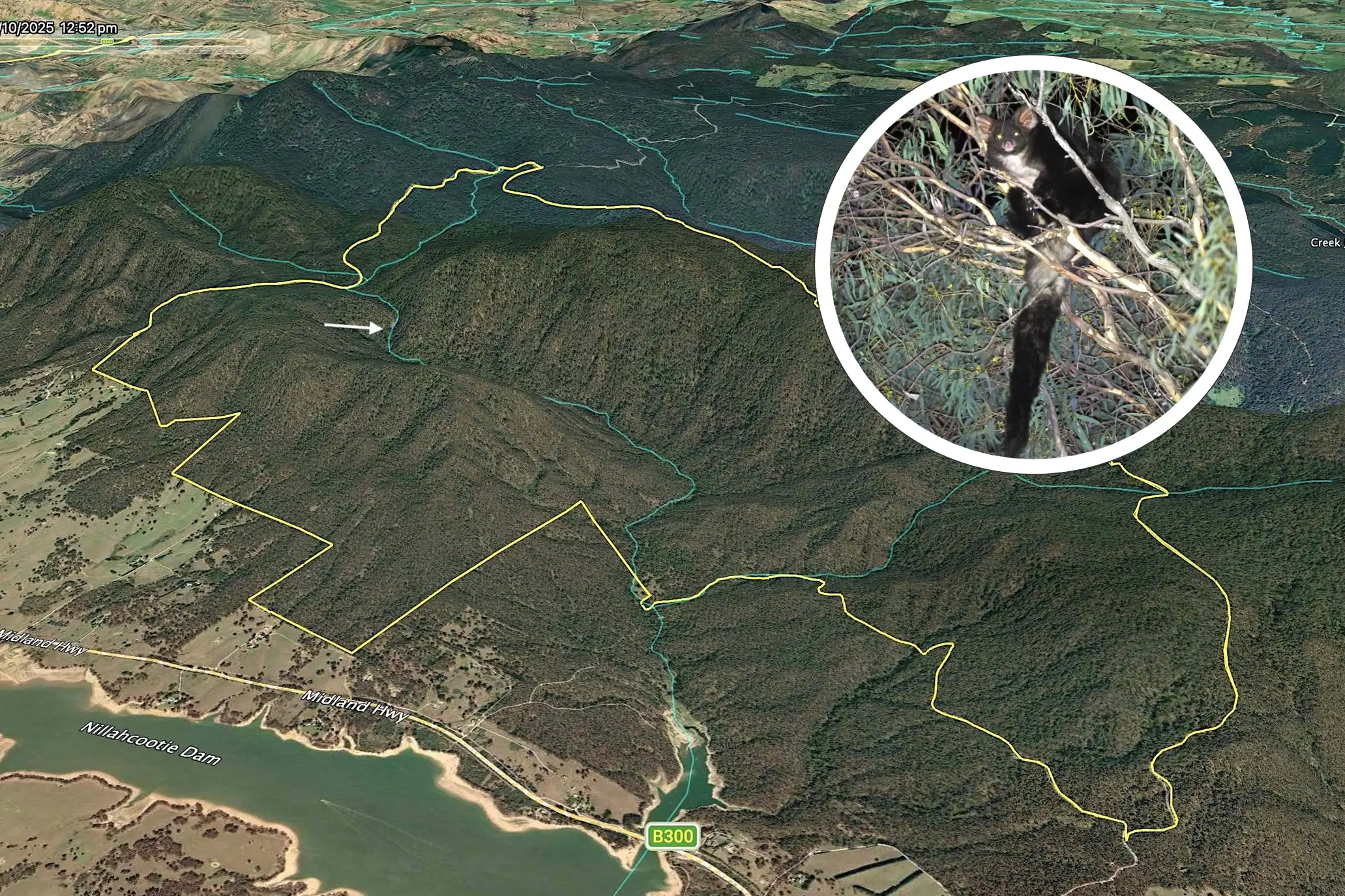
A planned 2000-hectare fuel-reduction burn in the Strathbogie State Forest has sparked concerns about potential impacts on one of the region's largest known populations of a nationally endangered marsupial. Recent drone surveys of the Barjarg-Sandy Creek planned burn area identified what local ecologist Bertram Lobert from Save our Strathbogie Forest (SOSF) believes may be a substantial population of greater gliders (Petauroides volans). The surveys found 72 greater gliders across eight survey sites and led to an estimate that the broader catchment could support around 1000 animals. Mr Lobert said the findings highlighted the need for caution before any burn proceeded. "The surveys found that the Barjarg-Sandy Creek planned burn area is home to a large population of greater gliders," he said. "SOSF urges the Victorian Government to not only proceed with extreme caution, but to refer this burn to the EPBC compliance unit for advice on how such a planned burn might comply with the Act and avoid having a significant impact on the greater glider." In mid-2025, SOSF engaged drone operator Field Master Systems to conduct surveys of arboreal mammals in the proposed burn area. "Making good decisions about forest management clearly improves as the amount and quality of knowledge increases," Mr Lobert said. "We felt it was important to find out more, to add to that body of knowledge." The surveys were undertaken as part of a Trust for Nature project funded by the Urquhart Charitable Fund. Mr Lobert was employed by Trust for Nature at the time. According to the survey report, about 1580 hectares of the proposed burn area contains vegetation types considered suitable greater glider habitat. The area has experienced comparatively little disturbance in recent decades, with most of the catchment having neither burned nor been logged for more than 55 years. Mr Lobert said previous records had confirmed the presence of greater gliders around the margins of the Sandy Creek catchment, but little was known about populations deeper within the valley system. That knowledge gap was addressed by the drone and thermal-imaging surveys. Mr Lobert argues that fuel-reduction burns can affect hollow-bearing trees, which are critical habitat for the species. "It’s very concerning that the Victorian Government is planning to burn an area with high conservation values and now confirmed as being home to a large number of greater gliders," he said. The proposed burn is located within the Sandy Creek catchment, which drains a significant portion of the Strathbogie Forest and includes habitat surrounding Sandy Creek Falls. It was originally scheduled for autumn 2026 but did not proceed.