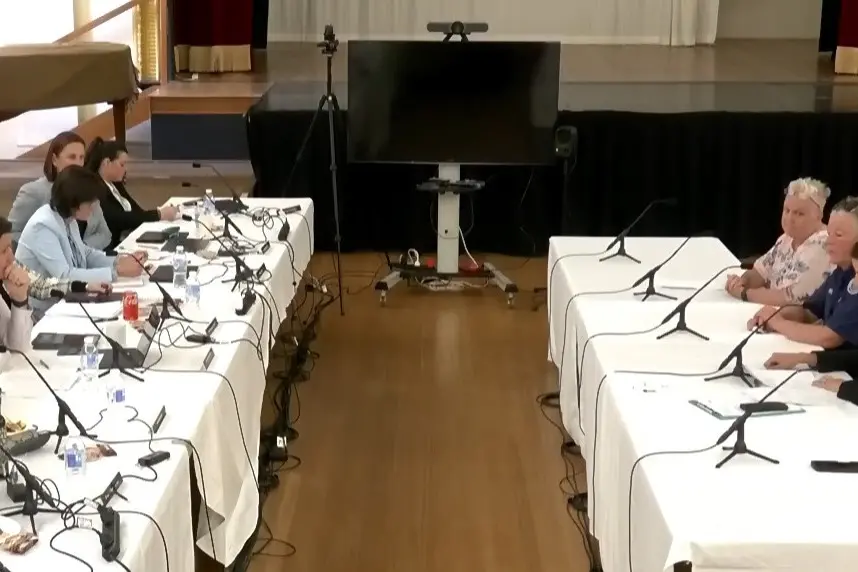
The first local public hearing of the parliamentary inquiry into the January bushfires laid bare deep anger, grief, and frustration, as residents, firefighters, and frontline workers detailed what they described as systemic failures before, during, and after the disaster. The inquiry’s open microphone session, held at Alexandra on Friday 24 April, became an emotional forum for testimony about breakdowns in communication, command, and recovery, with speakers warning that lives had been put at risk and lessons from past disasters ignored. Member for Euroa Annabelle Cleeland, whose property was impacted during the fires, delivered a detailed account of what she said were multiple failures at the highest levels of emergency management, telling the inquiry the response had left frontline volunteers exposed. Ms Cleeland said the fire response began to unravel with what she described as a 'catastrophic' breakdown in communication. “Radio channels were unclear, the communication plan changed during the fire, and that change was not communicated to the people risking their lives on the ground,” Ms Cleeland said. “Volunteers were left to operate blind.” She said there was evidence that central coordination centres could not confirm which radio channels brigades were operating on, describing the situation as a system failure that had put lives at risk. She said the problems were compounded by a complete breakdown in command continuity, with control shifting between locations, personnel rotating in and out on short deployments, and senior leaders lacking sufficient time to understand the fire ground before making decisions. She said critical leadership roles were vacant during key phases of the response, and it took several weeks before the Chief Fire Officer visited the fire‑affected area. One of the most serious failures, she said, occurred when the (Assistant) Chief Fire Officer left the fire ground at about 6pm on the Wednesday evening. “That decision left volunteer group officers to defend an escalating fire without senior command,” Ms Cleeland said. “They felt abandoned because they were abandoned.” She told the inquiry the timeline mattered, noting the fire jumped containment lines at about 2.30am the following morning, dramatically escalating the incident while volunteers were left to manage the situation. Ms Cleeland said the consequences were immediate, with about 40 vehicles trapped on the Hume Freeway, including a fuel tanker surrounded by fire. “The fact that more people did not die is nothing short of a miracle,” she said. She called on the inquiry to determine who directed the Assistant Chief Fire Officer to leave the fire ground, arguing that if the decision was made within the system, then the system was responsible, and if it was not directed, then it represented a failure of competency at the highest level. Ms Cleeland also raised concerns about what she described as ‘dangerous levels’ of fatigue, telling the inquiry volunteers had been working beyond safe limits for days on end, in some cases for eight consecutive days. She said exhausted firefighters who stayed to defend their properties lost homes, fencing, livestock, and livelihoods, yet were deemed ineligible for the $1000 emergency relief payment. “We built a system that punishes people for doing the right thing,” she said. Highlands Fire Brigade Captain David Webb said failures such as those outlined by Ms Cleeland reflected what his brigade experienced on the ground. Capt. Webb said his crew attended the fire on 7 January to find an escalating situation that was not being properly dealt with, with crews unwilling or unable to attack fires in paddocks. He said repeated requests for overnight patrols and additional strike teams were denied, even though local commanders had identified where the fire was heading. “Those were declined by the ICC (Incident Control Centre) with no explanation…while multiple strike teams sat in places in Yea, which was not under imminent threat,” Capt. Webb said. “We had CFA members in…and out of Melbourne areas wanting to come and help that were told to stand down and go home.” Capt. Webb said his brigade was ordered into asset protection early in the fire. “(But) the best way to protect an asset is to put the fire out,” he said. “And that was not done.” He said communication with ICC was often impossible, and his brigade did not receive additional support until the end of the second week. “It's a pretty hard thing to stand there in front of all your CFA volunteers… and say, ‘guys we're on our own,” Capt. Webb said. “I think it’s a disgrace.” Others told the inquiry the intensity and spread of the fire were avoidable. Julian Wilkes said the environmental damage caused by the fire should never have occurred at the scale witnessed, blaming inadequate burning and roadside vegetation management. Mr Wilkes accused governments of failing to act on recommendations from the Black Saturday Royal Commission and said policy influence from the Greens had contributed to fuel‑management decisions that left roadside vegetation unmanaged. “This so-called significant roadside habitat is actually insignificant,” Mr Wilkes said. “Fallen branches, leaves, and…its mismanagement under the green umbrella completely decimated the most important habitat, that being the centuries-old trees.” Mr Wilkes said those trees had formed critical habitat that could never be replaced and warned the landscape had been permanently altered as a result. Ms Cleeland spoke also about recovery, slamming the ongoing clean‑up program. “The cleanup program has been one of the most inequitable we have seen in a decade,” she said. “The Deputy Commissioner for Recovery has initiated a two-tiered system cleanup without eligibility criteria.” She warned that delays in asbestos removal risked contamination of water tables ahead of winter rain, and said that nearly four months on, the clean‑up had barely begun. She also criticised planning delays, stalled rebuilds, and said rate relief measures were only deferrals rather than exemptions, describing the expectation that heavily impacted families would continue paying rates as 'financially devastating'. “Housing is also completely inadequate with the only option being offered is caravans,” Ms Cleeland said. “We know where that leads: addiction, family violence, and long-term social harm.” She said neither the Premier nor the Prime Minister had visited the region, leaving communities feeling abandoned and warned the disaster risked going down as one of the greatest failures of government response in the state’s history. However, she said the inquiry presented an opportunity to fix the system, restore accountability, and ensure communities were supported when the next fire came. As the hearing progressed, the open‑microphone sessions became a focal point for raw emotion, with speakers pressing for accountability and urgent change. Towards the end of Ms Cleeland’s testimony, the inquiry’s chair attempted to move proceedings on, saying the open‑mic sessions were intended to give everyday members of the community an opportunity to speak. “I am an everyday member,” Ms Cleeland said. “Chair, I also got burnt.”