
PHOTO
One year after Victoria's controversial Emergency Services and Volunteers Fund (ESVF) levy came into effect, rural councils are telling communities that the fight to abolish the unpopular 'tax' will continue.
While temporary concessions announced by the state government have eased pressure on many farmers and rural landholders, Rural Councils Victoria (RCV) says the levy remains a live political issue heading into November's state election.
RCV chair Rob Amos said current waivers had created a false sense of security in regional communities.
"Farmers and some other rural landholders are currently benefiting from a levy waiver, which makes it feel like this issue has gone away," Cr Amos said.
"But that's just an election-year fix so the government can sidestep community angst.
"Labor remains committed to imposing this bad tax in full if it wins the election."
The levy replaced the former Fire Services Property Levy and was introduced by the Allan Government as a new funding mechanism for emergency services and volunteers.
Its rollout triggered widespread opposition across regional Victoria, with councils, farming organisations, business groups, and landholders arguing the burden fell disproportionately on rural communities.
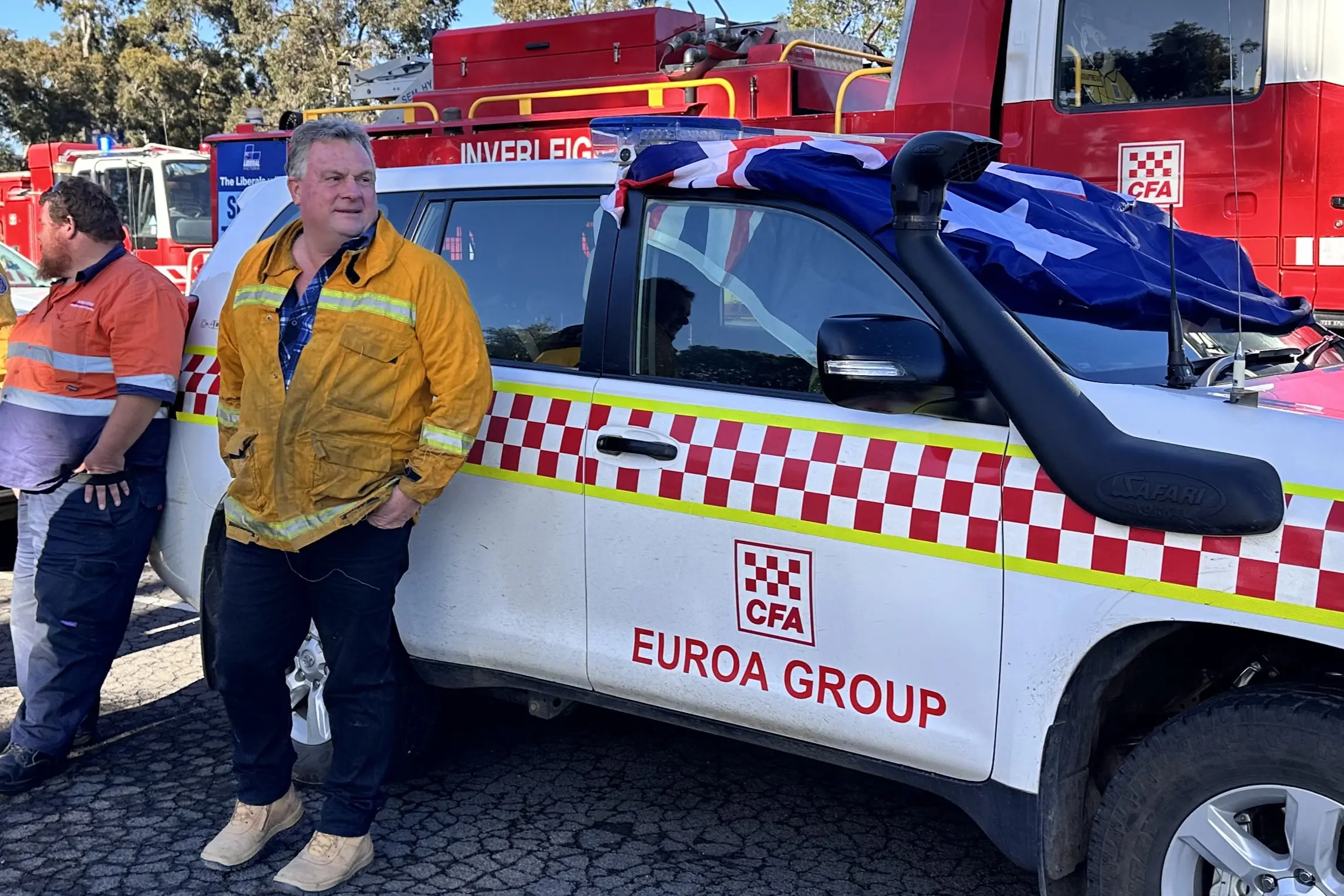
Large public meetings were held across regional areas during the early months of 2025 and two rallies held outside Parliament House stopped traffic while over 5000 CFA volunteers protested.
Councils passed motions opposing the levy and calling for substantial changes.
Cr Amos said the issue remained unresolved despite the temporary concessions.
"The dragon isn't dead, it's just sleeping," he said.
RCV has repeatedly called on the government to redesign the funding model and spread the cost of emergency services more evenly across the community, saying many regional property owners could again face significantly higher charges once temporary arrangements expire unless legislation is changed.
The levy's future is also emerging as an election issue.
Both the Coalition and One Nation have pledged to scrap the ESVF in its current form if elected in November, although according to RCV, neither has yet outlined a detailed replacement funding model.
However, National Party leader Danny O'Brien said the Coalition's position had been clear from the beginning.
Speaking to the Euroa Gazette on Sunday 5 July, Mr O'Brien said a future Coalition Government would abolish the ESVF and reinstate the former Fire Services Property Levy.
"We've said from the start that we would scrap the emergency services tax and go back to the Fire Services Property Levy, (which has) been there for a decade beforehand," Mr O'Brien said.
"That'll allow us to continue to properly fund the CFA and FRV."
Mr O'Brien said SES funding would continue to come from general revenue.
"We'll fund it as it's always been done, but ensure that they're actually getting the resources that they need," he said.
He argued the Allan Government had broadened the levy by shifting costs previously paid through consolidated revenue onto ratepayers.
"One of the reasons the government's done this, and why the rates have been increased so much, is that they've taken a whole lot of things that used to be in general revenue, like Triple Zero, Emergency Management Victoria, and Forest Fire Management, and added them to this tax," Mr O'Brien said.
"That's not fair because Victorians are already paying for those agencies.
"We will go back to them being funded from consolidated revenue and ease the burden on Victorians."
Cr Amos said whichever party formed government after the election would need to revisit the issue.
"The problem is not fixed; it's just been kicked into the long grass," he said.
"Everybody agrees our emergency services should be funded properly.
"But that money must also be raised fairly and sustainably."
Asked whether Victoria's growing debt burden could force a future Coalition Government to reconsider its commitment to abolish the levy, Mr O'Brien said the promise would be honoured.
"Absolutely," he said.
"We know what the budget figures are and we'll have to wait and see whether there's anything worse than that."
Mr O'Brien said a planned public service hiring freeze would help fund election commitments, including the repeal of the ESVF, and raise $22 billion over ten years.
"We're actually making savings; no one will lose their job under that hiring freeze, but it will help us control the cost of the public service and help us pay for election commitments like repealing the emergency services tax," he said.
However, Riggs Creek CFA volunteer David Sessions said some volunteers still had concerns about how emergency services would be funded if the levy was abolished.
Mr Sessions, a former brigade captain, former deputy group officer, and CFA volunteer of more than 40 years, said any alternative funding model should be clearly outlined before the election.
"I have deep reservations because under any government, where does the money go, who distributes it and where does it get distributed?" he said.
"I would want the Opposition to detail that before the election."
Mr Sessions said some volunteers believed regional brigades already received less attention than those closer to Melbourne.
"What we see is that trucks are a lot newer when they are closer to Melbourne, and the further we get out, no one gives a flying crap," he said.
As campaigning begins ahead of the state election, RCV is urging regional communities to remain engaged in the debate and continue pressing for a long-term solution.
Concerns about fairness remain at the centre of opposition to the levy, with many regional residents supporting emergency service funding but objecting to the way the levy has been structured.
The issue has been particularly contentious in farming districts, where property values can be high despite seasonal pressures on farm income.
Councils involved in the campaign have consistently argued that emergency services should be funded in a manner that recognises both ability to pay and the differing impacts across metropolitan and regional areas.
Cr Amos said RCV would continue advocating for changes regardless of the election result.
The organisation wants future funding arrangements to provide certainty for emergency services while avoiding what it describes as "disproportionate impacts" on rural communities.
With the levy now entering its second year, the issue is expected to remain a significant topic throughout the state election campaign.