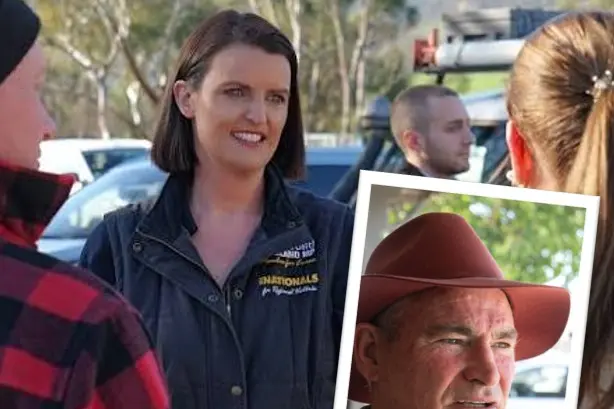
Voters across Strathbogie Shire will head to the polls this Saturday 28 November to help decide who will represent them in the Victorian Parliament for the next four years. Residents will have the opportunity to cast their votes for the seat of Euroa at polling booths across the district, while those wanting to avoid election day queues can still vote early until Friday. Early voting has proven very popular with voters since it opened on Wednesday 18 November, with the electorate's three pre-polling stations at Wandong, Seymour, and Benalla recording long queues and wait times. Pre-poll voting continues until Friday, with centres open between 9am and 6pm. Incumbent Annabelle Cleeland and Labor candidate Julian Kelly gave their final pitches last week, with both speaking to The Euroa Gazette. Ms Cleeland said while campaigning at pre-polling stations, she believed many voters were approaching the election from two perspectives. "There are two options right now, to protest or to change the government," she said. "I'm making sure that people understand that to change the government, they have to vote for Nationals in the seat of Euroa and let us get on with giving regional Victorians a fresh start." Ms Cleeland said many of the Coalition's commitments were built around what it described as a 'fair share guarantee' for regional Victoria, focusing on delivering a greater share of infrastructure and services outside Melbourne. She said the Coalition was ready to govern immediately, pointing to commitments that included police recruitment, bail reform, road funding, the abolition of the Emergency Services Volunteer Fund levy, and cost-of-living relief. She also said a Coalition government would recall Parliament before Christmas. "This is the point, that we are the alternative government and we are ready to govern," Ms Cleeland said. "We want to introduce legislation that people will see and feel change from in the first 100 days. "That is scrapping the emergency services tax in the first 100 days, we will be getting out and fixing the roads immediately with a priority focus, and we will also see bail reform in the first 100 days as well." Bail law reform was a key part of Ms Cleeland's platform to make regional communities safer and help boost local police numbers. She said the 'revolving door of crime' under the state's current laws meant police no longer felt a sense of purpose in the job. "Those that do come through the academy are burning out very quickly and not staying in the job because of the soft and weak bail laws, and we need to change that," she said. "There are 3,000 additional police officers on the table. "Half will come from Australian recruitment pathways and half will be targeted from overseas, particularly the UK, Ireland, and New Zealand, who have got a similar policing model to us." She said voters in Euroa would notice by the end of a Coalition's first four-year term the duplication of rail services, greater power reliability, and improved community safety through stronger disaster preparedness and crime reduction measures. Labor candidate Julian Kelly used his final interview to highlight community participation, affordable activities for young people, and support for families doing it tough. He said his long-term goal remained on the need to help people access sport, work, and community activities and that his focus had been built on a career as a shearing contractor and farmer, where he employed young people and helped them find further direction beyond the shearing shed. "It's about helping them with sport and work - I've had kids work with me for over 30 years," Mr Kelly said. He said his career experience had allowed him to recognise young people who were falling through society's cracks, and that more support was needed for those communities facing social disadvantage. "I know of one welfare pocket in this electorate that needs all of our help," he said. "Every community body, footy clubs, Rotary, Apex, all have to look at this and say, 'We've got to do better'. "I've got a social conscience. It's been with me all my life." He also said his 'uncompromising' work ethic had shaped his political direction. "It gives me the ability to bring people together to achieve the highest of outcomes." Mr Kelly conceded that the government could have done more for bushfire recovery, saying there were "not enough legs on the ground". Asked whether he would be prepared to challenge his own party if elected, he said he would continue to advocate strongly for regional communities. "Definitely. I know how to kick a door down. I'm not a lightweight," he said. Other candidates also used the campaign to promote a range of priorities, with One Nation's Steve Campbell focussing on law and order, regional roads, emergency services, opposition to large-scale renewable energy developments, and reducing what he described as unnecessary regulation on business. Alysia Regan of The Greens highlighted cost-of-living pressures, healthcare access, community safety, renewable energy, and increased investment in regional services and public transport. Karina Kelly is standing for the Animal Justice Party and centred her campaign on animal welfare, public healthcare, environmental protection, and improved education and transport opportunities for regional communities. Zoe Lyle of the Victorian Socialists campaigned on housing affordability, public ownership, free public transport, expanded health services, and greater support for working-class communities. Family First candidate Moussa Taouk said on his webpage that he was campaigning for the strengthening of the family unit and that governments should prioritise policies that strengthen families and communities.